
Right-size the water heater
Capacity is matched to your household demand and fixtures. Oversizing wastes money and can cause short cycling on some systems; undersizing causes cold-water surprises.
Serving Seattle, Washington & surrounding areas
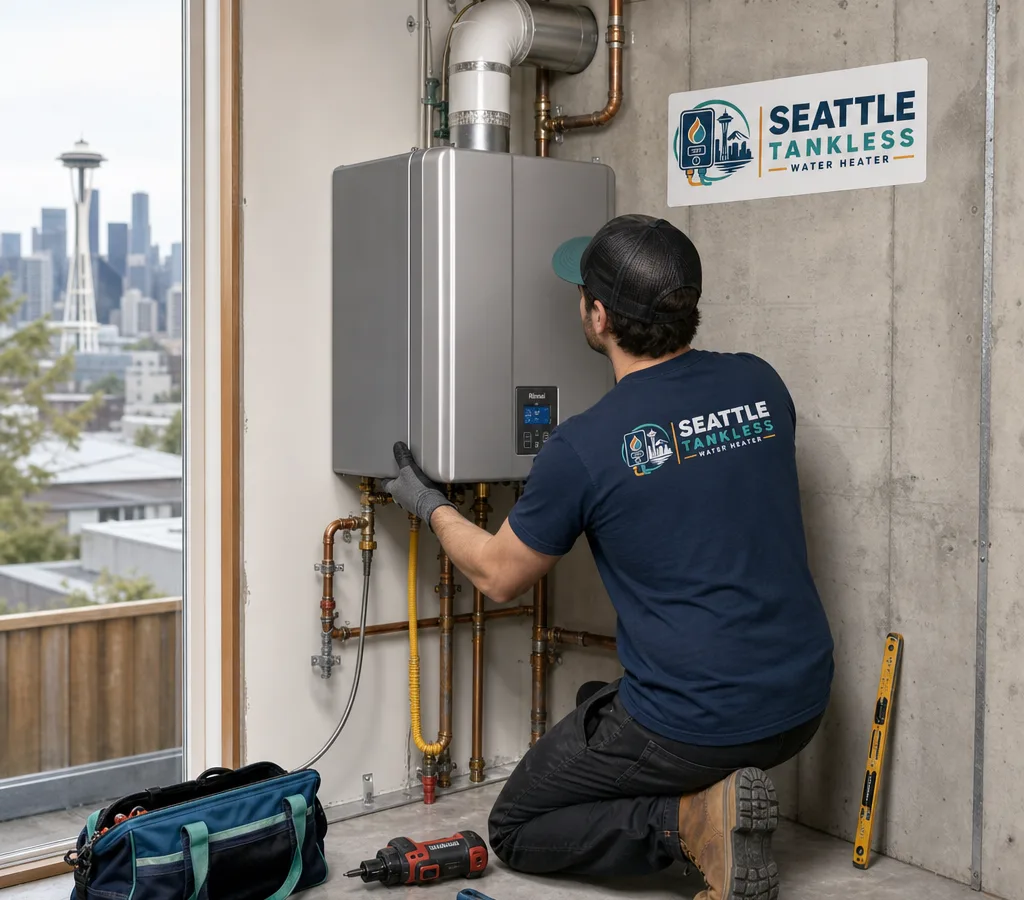
Water heater installation · Seattle
Replace a failing unit, right-size capacity, and get a clean, code-compliant install with upfront pricing and a tidy work area.
If you are searching for water heater installation Seattle homeowners can count on, start with the basics that decide whether the job lasts: correct sizing, safe venting, properly installed temperature and pressure relief discharge piping, and shutoffs you can reach when you need them.
Seattle Tankless Water Heater installs both tank and tankless water heaters for residential properties across Seattle. We focus on clean workmanship, clear communication, and code-compliant details that get missed in rushed installs.
What we help with most often:
Seattle's mix of older homes and remodels means we often walk into a blend of old and new piping, prior DIY work, and limited clearances. A good install plan accounts for access, vent route, combustion air, seismic restraint, and where the unit can be serviced later without tearing the room apart.
Professional installation scope
Capacity is matched to your household demand and fixtures. Oversizing wastes money and can cause short cycling on some systems; undersizing causes cold-water surprises.
For gas units, we confirm vent type, route, clearances, and termination location. If the space is enclosed, we address combustion air so the burner can operate safely.
We install shutoff valves and unions where appropriate, provide a safe drain plan, and keep required clearances so future maintenance is straightforward.
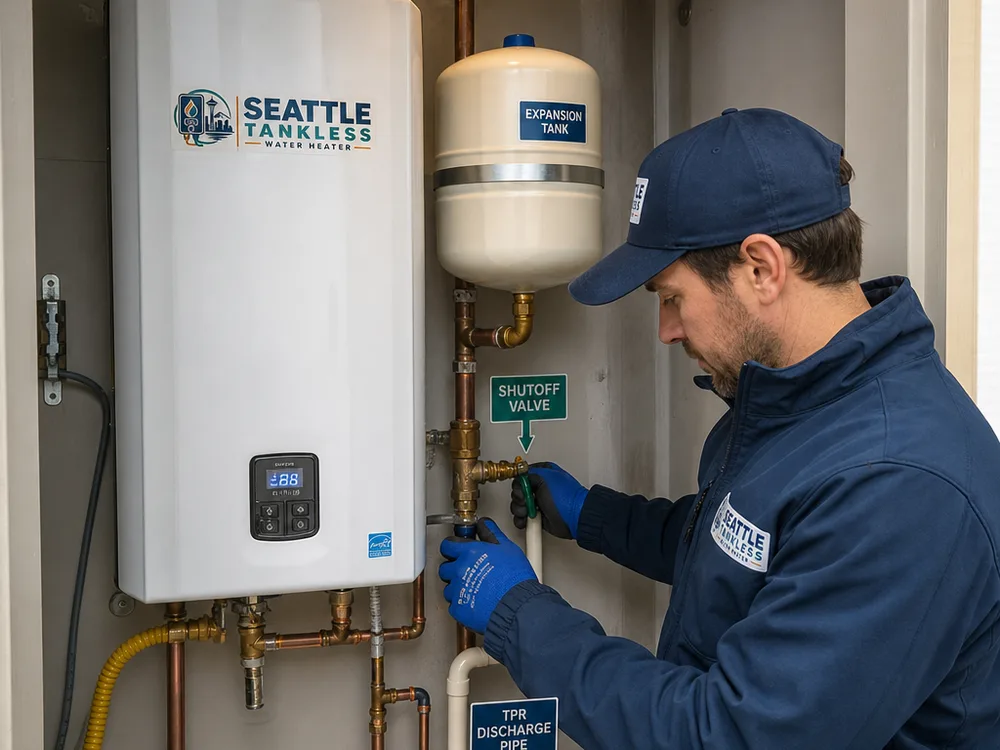
The temperature and pressure relief valve is a safety device. The discharge line must be routed and terminated correctly so it can relieve pressure without causing damage.
Water heaters need to be restrained and mounted per local requirements. We strap or mount the unit correctly so it stays stable.
Where permits apply, we aim for an install that is ready to be inspected: labeled shutoffs, correct venting, proper bonding or grounding, and tidy pipe routing.
Installation considerations
Seattle water heater replacements are rarely one-size-fits-all. These are the local factors that often affect the scope, materials, and timing.
We also plan around the realities of working in a dense city: parking and loading, protecting finished floors, and minimizing downtime so you are not without hot water longer than necessary.
The team at Seattle Tankless Water Heater can walk you through tank versus tankless based on the home's venting, fuel type, available electrical capacity, and how your household actually uses hot water.
We identify the current unit type, inspect venting and connections, and confirm the replacement plan, including any code-driven updates needed for a safe install.
We shut down water and fuel or electrical service safely, drain the tank if applicable, and remove the existing heater with attention to floors, walls, and tight turns.
We install the new unit, connect water and gas or electric, route TPR discharge, add an expansion tank where required, and preserve access for future maintenance.
We leak-test, verify venting performance for gas units, confirm temperature settings, and check that the system delivers steady hot water at fixtures.
We leave the area clean and explain shutoffs, normal sounds and operation, and what maintenance to schedule so the heater stays reliable.
Seattle pricing guidance
Water heater installation in Seattle typically ranges from about $1,800 to $4,500 for a standard tank replacement and $4,000 to $9,500+ for many tankless installations, depending on venting, gas line or electrical upgrades, and access. Straight swaps in an open garage cost less; tight mechanical closets, long vent runs, condensate drains, and code corrections increase labor and materials. The exact price is confirmed after an on-site inspection of the existing unit, connections, and venting path.
Plan Installation VisitCommon questions
Many water heater replacements and new installations require a permit and must meet current safety and mechanical code requirements, especially when fuel type, venting, or location changes. Even a same-location replacement can trigger updates to items like venting, seismic restraint, or TPR discharge routing. We will review what applies to your specific installation and plan the work so it is inspection-ready.
A straightforward tank water heater replacement is often completed the same day, while a tankless installation commonly takes longer when venting, gas line sizing, electrical circuits, or condensate drainage must be added or modified. Access also matters; a tight condo closet or an upper-floor install adds time. We will give you a realistic schedule once we see the existing setup.
Sometimes, but it depends on whether your home has the required fuel service and whether venting and electrical capacity can be provided safely. Switching to gas usually means adding proper venting and confirming gas line sizing; switching to electric may require a correctly sized circuit and breaker. We can explain the tradeoffs after evaluating your current utilities and installation location.
A home is a good candidate for tankless when the fuel supply and venting path support the unit and when hot water usage patterns justify the upgrade. The most common limiting factors are vent routing, gas line capacity, electrical requirements for ignition and controls, and where condensate can drain for high-efficiency models. We will assess these items before recommending a conversion.
The biggest cost drivers are venting changes for gas units, gas line resizing, adding an expansion tank where required, upgrading shutoffs and connections, and resolving unsafe conditions discovered at the old heater. Tight access, long pipe runs, and bringing an older setup up to current code also increase labor. A quick on-site inspection is the best way to confirm scope before work starts.
Yes, as long as the building allows the work and we can meet clearance, venting, and drain requirements. Condo installs often involve compact mechanical closets, shared walls, and stricter scheduling for access and shutoffs. We will coordinate the install plan around the unit location, access rules, and any building requirements that affect safe installation.
If your water heater is leaking, running out of hot water, or due for replacement, get a written scope that covers venting, shutoffs, safety devices, and what will change during the install.
Plan Installation VisitSchedule an assessment
Tell us what type of unit you have now and what is going wrong. We will confirm options, explain what code-compliant installation requires in your space, and provide upfront pricing before any work begins.